.png)
As AI continues to permeate daily life, consumers are faced with navigating a brave new world of automations, agents, and chatbots for everything from ordering groceries to filing a property insurance claim.
I spent much of my career working as a property insurance claims adjuster—employed by the insurance carrier to adjust policyholder claims. However, in 2025, I made the jump from the carrier side to consumer advocacy as a licensed Public Adjuster.
The experience I gained by handling claims in various states and reviewing and interpreting policy language for countless policies across the country prepared me to be an expert claim negotiator for homeowners and business owners. These days, I help my clients fight for a fair settlement under their policy by leveraging my knowledge of insurance carrier internal processes and policy nuance for their benefit.
And I have real concerns about how carriers’ adoption of AI will impact policyholders. Here’s what my years of experience tell me about AI use in the insurance industry.
Major insurers turn to AI
Recent news about State Farm layoffs due to AI has turned the spotlight on the major practical and ethical issues arising from AI use during the insurance claims process.
One of the things I feel is most lacking with the property insurance industry is the education of consumers about the process, claim requirements, timelines, and policy language. This isn’t going to improve with mass layoffs and a heavier dose of AI thrust upon policyholders.
AI may bring benefits, but the questions should be “For whom?” Automations and process efficiencies may allow the carrier to squeeze out more profit, but they certainly won’t improve the policyholder experience or lead to fewer wrongful denials or underpaid claims.
How insurance carriers are using AI
Insurance carriers have not shied away from incorporating AI into several parts of the claims process. Starting with the actual filing of the claim (also known as First Notice of Loss), to routing the claim to the appropriate department, to fraud detection, answering FAQs, writing estimates, and processing documents.
“Next Gen Good Neighbor” is State Farm’s new rollout designed to marry tech with human interactions. I see this initiative as a step backward for the industry in regards to customer service and claim resolution.
It is so easy to get lost in the endless automated cycle when you call in, are met with pre-recorded prompts, and are bombarded with questions that shovel you toward a system-generated response at the end. All of this appears to be geared toward keeping you from reaching a human.
Less human agent interaction is a detriment to policyholders.
For the customer, removing the human element from the process creates far more frustration and delays than efficiencies. I’ve experienced this firsthand as a policyholder myself, and I can’t imagine what people are going through who don’t have extensive knowledge and experience navigating claims.
One of the most consistent things about insurance is that there are so many gray areas when it comes to policy interpretation and damage adjustment. You can’t program AI to see the gray areas or to apply rationale when it comes to hearing an alternate perspective from the original.
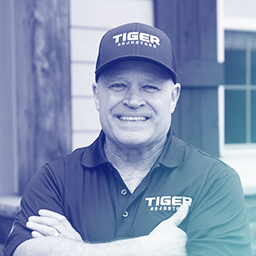
Steve Faunce, Owner/Operator of Tiger Adjusters Kansas City
Policyholders are frustrated with the automated prompts because there hasn’t been a system designed to effectively replace the complex and contingent decision-making that claims often require.
Should policyholders use AI to navigate their claim?
While it might be tempting, I do not recommend that policyholders navigate or negotiate claims on their own, regardless of whether they use AI. ChatGPT and other major models are driven by user input. Specific vocabulary or phrases used can change the output completely.
Most policyholders don’t have the experience with interpreting and applying policy language, and using the incorrect terminology could render the AI advice totally useless and result in claim denial or an underpaid settlement.
If you’re feeling frustrated or confused by the claims process, the better move is to hire a licensed Public Adjuster to represent your claim. Your insurance carrier has their own adjuster to represent their interests—let a professional advocate for you.
More About My Experience
From my background on the carrier side, I understand what insurance adjusters are looking for and I work to give them what they need to reach a claim resolution as quickly as possible. This knowledge also positively impacts my success rate with supplement requests, which ensures that my customers have all the funds needed to complete repairs.
Extensive training with the Xactimate estimating platform elicits respect from the company adjusters, which fosters a collaborative (rather than combative) relationship with the carrier in order to facilitate a positive outcome for the client.
My team and I at Tiger Adjusters aim to deliver an optimal customer experience through transparency, advocacy, and deep expertise. Reach out for assistance with your claim.