The Vacancy Clause Trap:
As a property owner, you might assume your standard policy covers your structure regardless of occupancy. Unfortunately, for those who own a second home, or a rental property that is vacant and in between tenants, or a property undergoing renovation with no on-site resident, the Vacancy Clause can be a dangerous, hidden exclusion that discounts or voids a claim. This clause is a tool insurance carriers use to deny coverage for losses that occur when a property sits vacant for a specific period of time–typically 60 consecutive days.
Nationwide, the overall housing vacancy rate (including seasonal, for sale and for rent) sits at around 10.43%, translating to roughly 15 million homes across the U.S. that are not consistently occupied (Lending Tree, 2025). For this segment of property owners, understanding the Vacancy Clause is an important part of risk management.
The distinction between a vacant and unoccupied property is often the core of a claim denial. The standard H0-3 homeowner’s policy and many commercial policies define a building as:
Vacant properties pose a greater risk to insurers since there is no one to spot a slow water leak, respond to a fire, or deter vandals. Insurers might mitigate this risk through a Vacancy Clause. If a covered peril, like fire, water damage or vandalism, occurs after the property has been vacant for 45 - 60 consecutive days, coverage is often severely limited or completely denied.
Once the 45 - 60-day mark is reached, the policy often excludes or severely limits coverage for perils frequently associated with vacant properties, such as:
The most effective way to protect your investment during a period of vacancy is to be proactive. If you know the property will be vacant for a period of time, contact your insurance agent and request a Vacancy Permit or Endorsement.
This endorsement modifies your policy and usually extends the coverage period—often in 90-day increments—in exchange for an additional premium. Failure to secure this endorsement is considered a breach of the policy's conditions, which gives the carrier a clear path to deny your claim.
According to the Insurance Information Institute, “water damage is one of the most common and expensive issues in unoccupied homes” (Dunsavage, 2025)
Even with an endorsement, you should document your efforts to maintain the property. These records demonstrate that you fulfilled your policy obligations and attempted to mitigate risk. Keep records of:
A professional Public Adjuster can make sure that property owners are properly indemnified for loss, and that a fair and honest settlement is provided. In Vacancy Clause cases, we challenge the denial by:
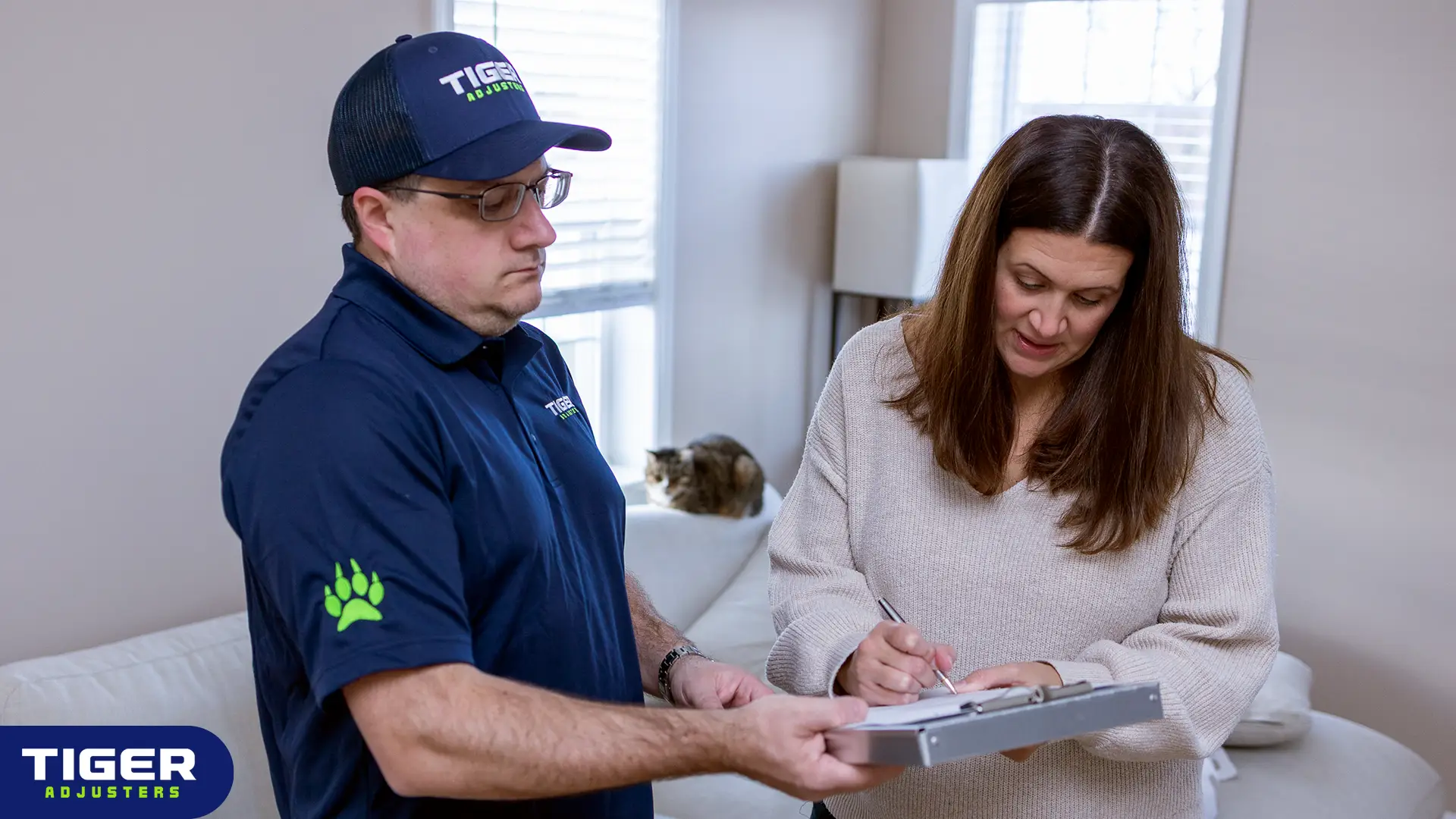
Public Adjuster and CEO of Tiger Adjusters®, Ted Patestos, recalls a client case where there was ambiguity in the policy language that he uncovered and used to successfully argue for payment of a vacant homeowner claim.
“We had a vacant property claim from Houston where the owners had a burst pipe in the home’s attic when the home sat empty while awaiting for a new tenant. After I obtained a copy of the policy, I looked at the language and essentially the language said that if the homeowner had not maintained their heat and kept utilities on in the property that the loss wouldn’t be covered.
I provided property utility records to the insurance carrier to demonstrate that the utilities were on when the loss occurred. The insurance carrier came back and argued that the usage for the electricity in the property at the time of the loss was below normal standards. They denied the claim by asserting that the homeowner had not met their obligations under the policy – that they hadn't maintained their utilities.
I went back to the policy, looked at the language and there was ambiguity with no clear definition or requirement at what temperature the insured needed to keep their property at. All the policy stated was that the homeowner had to have utilities active at the time of the loss.
I constructed a counter argument, identified that language, and submitted the counter to the insurance carrier. Three weeks later, the insurance carrier issued a check for full payment of the claim.”
Protect your vacant or unoccupied investment — contact Tiger Adjusters®.