
Within property insurance, "ambiguous terms" refer to policy wording that is unclear or can be interpreted in more than one way. "Conflicting language" occurs when different parts of the same policy seem to contradict each other, making it unclear what coverage applies. When such ambiguity or conflict exists, legal precedent generally holds that the language should be interpreted in favor of the policyholder.
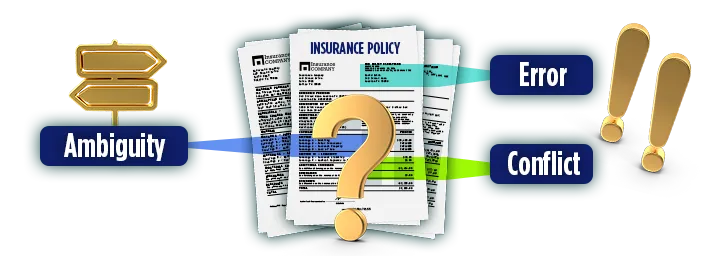

Alright, let's talk about ambiguous terms and conflicting language in your policy! Now, this is where things get really interesting, and honestly, can be a bit stressful. It's like the insurance company tried to write a recipe, but they used vague measurements and then contradicted themselves later on.
"Ambiguous terms" means the words are fuzzy – they could mean one thing, or they could mean something totally different. Then, "conflicting language" is when one part of the policy says "yes, covered!" and another part says "nope, no way!" It’s like your policy is having an argument with itself, right? In fact, researchers indicate that only about 30% of American homeowners truly know what their insurance policies cover, a clear sign of how often ambiguous terms and complex language create confusion. But here's the cool part: when these situations happen, the law usually leans on your side as the policyholder.
No, not every single term is ambiguous, but come on, insurance policies are notoriously complex. They're written by lawyers who try to cover every single possibility, and sometimes, that just leads to a muddled mess. So, it's pretty common to find wording that isn't perfectly clear, or clauses that seem to bump heads. Insurers often interpret these ambiguities in their favor first, which is why it's a problem for you. It’s like they set up a puzzle, then only give you half the pieces! Good thing you have a Public Adjuster to act as your policy linguist, dissecting those tricky sentences and making sure any fuzzy language works for you, not against you!
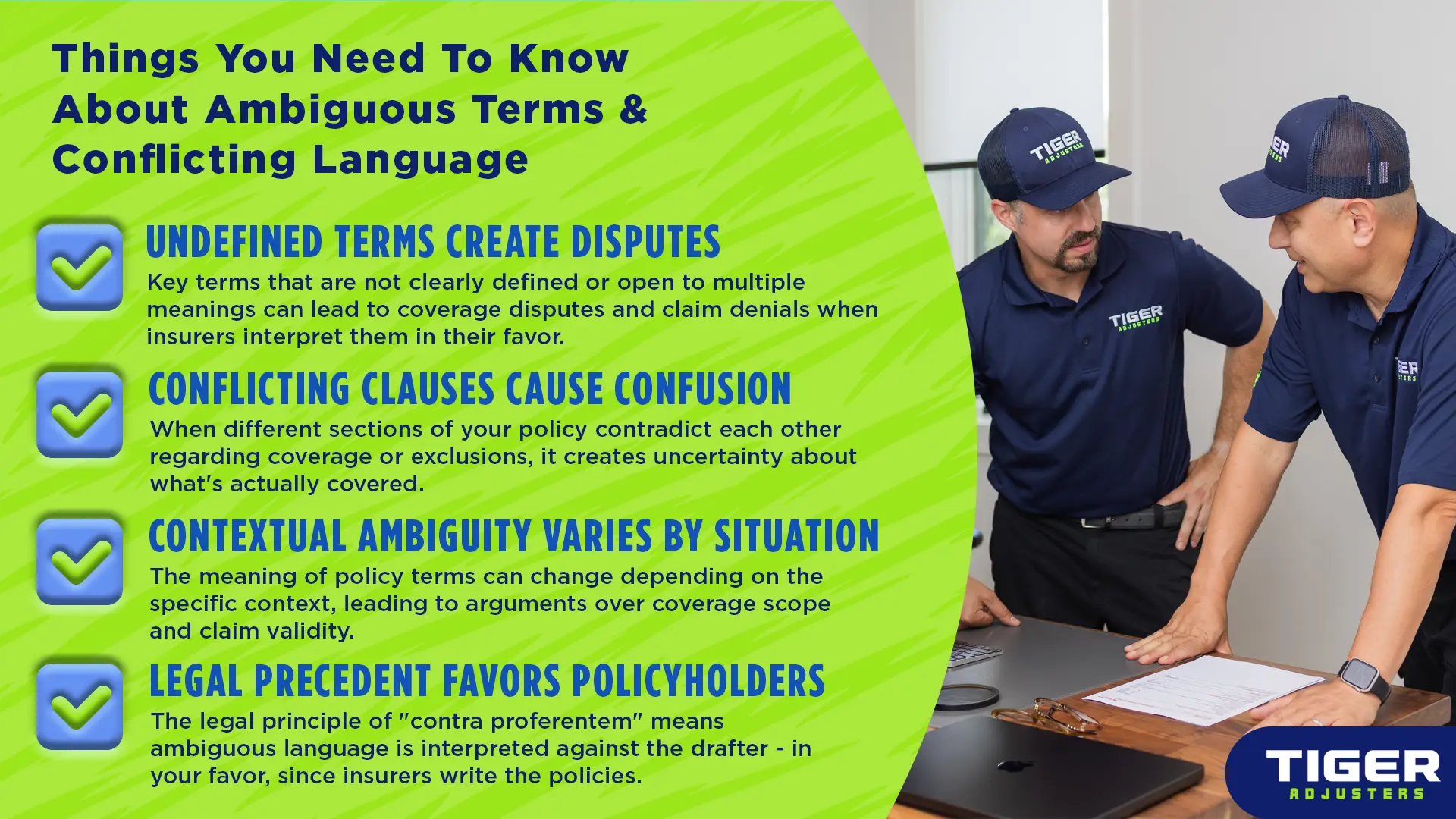
No, definitely not! Some ambiguities are minor and easily resolved, while others can be the basis for major legal battles. A small ambiguity in a minor clause is less impactful than one affecting a core coverage grant or a major exclusion. The cool thing is, courts consistently rule that ambiguous policy language should be interpreted in your favor, especially if it's about what's covered. Now, while the law does favor you, it's often your responsibility to spot that fuzzy language and argue for the interpretation that helps you. They won't just hand you the win, you know!
Ambiguous terms and conflicting language are often hidden traps in your insurance policy. While they can seem confusing, remember that these unclear spots usually lean in your favor. Don't let confusing wording lead to a denial. For a thorough review of your policy's fine print and to confirm that any unclear language works to your advantage, always consult with a Public Adjuster. We're pros at interpreting those tricky policy intricacies and we'll clarify what's covered versus what's not in your policy!


