Insurance Terms Glossary

Declarations Page

Within property insurance, the "Declarations Page" (sometimes called "Dec Page") is typically the first page or section of your policy. It acts as a summary, providing the essential, personalized details of your specific insurance contract. It's the quick-reference guide to who, what, when, and how much your policy covers.

Declarations Page

Troy Tiger Explains: Declarations

Alright, let's talk about the "Declarations Page!" This is basically like the front cover of your favorite comic book, but for your insurance policy. It's usually the very first page, or one of the first few, and it's super important. Think of it as the quick-start guide or the mission briefing for your specific insurance plan.

This page lays out all the crucial stuff: who, where, when, and how much. It’s literally the page that declares what your policy is all about. It connects all the pieces of your coverage together, giving you the essential information at a glance.

Declarations Page Purpose

  • Clearly states who the named policyholders are and the insurance carrier.
  • Specifies the exact start and end dates of your coverage.
  • Provides the address and details of the property being covered.
  • Shows each type of coverage and the maximum amount the insurer will pay for each.
  • Displays the amount you must pay out-of-pocket before your insurance kicks in for a covered loss.
  • Shows the cost of your insurance policy for the specified period.

How The Declarations Page Works

  • When your insurance policy is created or renewed, the Declarations Page is created with it.
  • You should immediately review this page to confirm all the details are accurate and match your understanding of the coverage you've purchased. Studies reveal that an average of nine errors are found in each insurance policy, highlighting the critical need for policyholders to thoroughly review their declarations page upon receipt.
  • Throughout the policy term, it serves as the go-to spot for fundamental information when you have questions about your coverage, limits, or effective dates.
  • In the event of a claim, Public Adjusters will always refer to the Declarations page first to confirm the policy was in force, the property was covered, and the limits applicable to the loss.

Does Every Policy Have a Declarations Page?

Yes, every single insurance policy will have a Declarations Page! It's a fundamental and legally required component of any insurance contract, acting as the personalized summary of your specific agreement.

While it's always there, it's easy to overlook or misinterpret details. You might also get endorsements that change what's on the Declarations Page, so you need to keep track of those too. Given that up to 30% of American homeowners may not fully understand their insurance policies, a careful review of the declarations page is important to bridge this knowledge gap. Contact a Public Adjuster to act as your policy navigator, helping you read between those lines and making sure every detail on your Dec Page aligns with the protection you need!
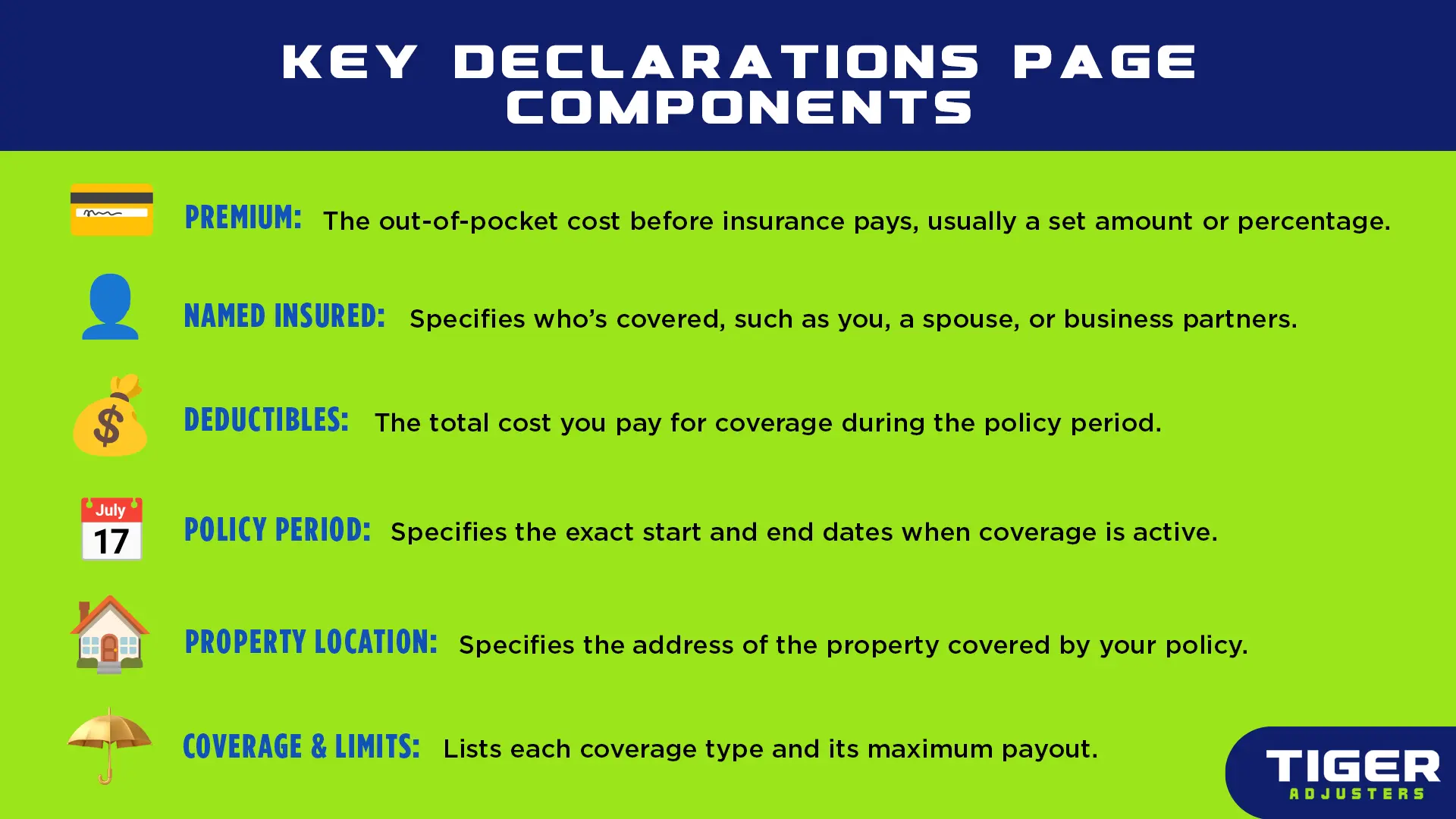
Infographic: Declarations Page Components

Breakdown of Key Declarations Page Components:

  • Named Policyholders:
    • This section clearly states who is covered by the policy.
  • Policyholder Identity: 
    • Your name, and sometimes other individuals (like a spouse or business partners) explicitly covered.
  • Policy Period:
    • Define the exact timeframe your coverage is active.
  • Start & End Dates: 
    • Specifies the precise dates and times your policy becomes effective and when it expires.
  • Property Location:
    • Identifies the specific address of the insured property.
  • Coverage Types & Limits:
  • Deductibles:
    • The amount you pay before insurance kicks in.
  • Per-Claim Basis: 
    • Often a fixed dollar amount or a percentage of your dwelling coverage, applied per covered loss.
  • Premium:
    • The cost of your policy.
  • Payment Details: 
    • The total amount you pay for the coverage over the policy period.

Are All Declarations Pages Created Equal?

No, definitely not! While the basic components are consistent, the layout, level of detail, and even the clarity of presentation can vary significantly between different insurance companies. Some insurers have very clear, easy-to-read Dec Pages, while others can be dense and confusing. The Declarations page will often list attached endorsements (additional coverages or modifications). It's crucial to cross-reference these with the actual endorsement forms. Any changes made to your policy should result in a revised Declarations page or an endorsement form that updates it. Always check for the latest version!

Final Thought:

The Declarations page is your policy's critical front door – it tells you who, what, when, and how much is covered. Don't just glance at it; understand every line, because this summary dictates your financial protection. For a thorough review of your policy's declarations and to confirm every detail aligns with your needs, consult with a Public Adjuster. We're pros at interpreting those tricky policy intricacies and we'll clarify what's covered versus what's not in your policy!

Search for more terms