
Within property insurance, "dwelling coverage" (often referred to as Coverage A) is the part of your homeowner's policy that protects the physical structure of your house and any attached structures, like a garage or deck, from covered perils. It's the core protection for the main place you call home.

Alright, dwelling coverage! This isn't just some fancy add-on. This is the absolute core of your home's protection, the big kahuna of your policy, you know? It's the part that covers the actual house itself– the walls, the roof, the floors, everything built-in like cabinets and plumbing, basically everything that makes it a house. Think of it as your property's main operating system, the essential foundation that, hopefully, keeps everything else running smoothly. It also covers attached structures like your garage or deck, and if a covered peril damages your home, it provides the funds to repair or even rebuild it from the ground up to its pre-loss condition. Each year, about one in 35 insured homes has a property damage claim related to wind or hail, proving just how important this structural protection is (Insurance Information Institute)!
If you have a homeowner's insurance policy, Dwelling Coverage is almost always the cornerstone of your protection. It's typically listed as "Coverage A" and is the primary amount for which your home is insured.
While it's usually included, picking the right amount of coverage can be tricky. Insurance companies often try to figure it out based on market value, but what you really need is enough to rebuild, and those numbers can be wildly different. Don't let them leave you short! Good thing you have a Public Adjuster to act as your building code consultant, helping accurately value reconstruction costs and making sure your coverage is fully utilized. We make sure the system works for you!
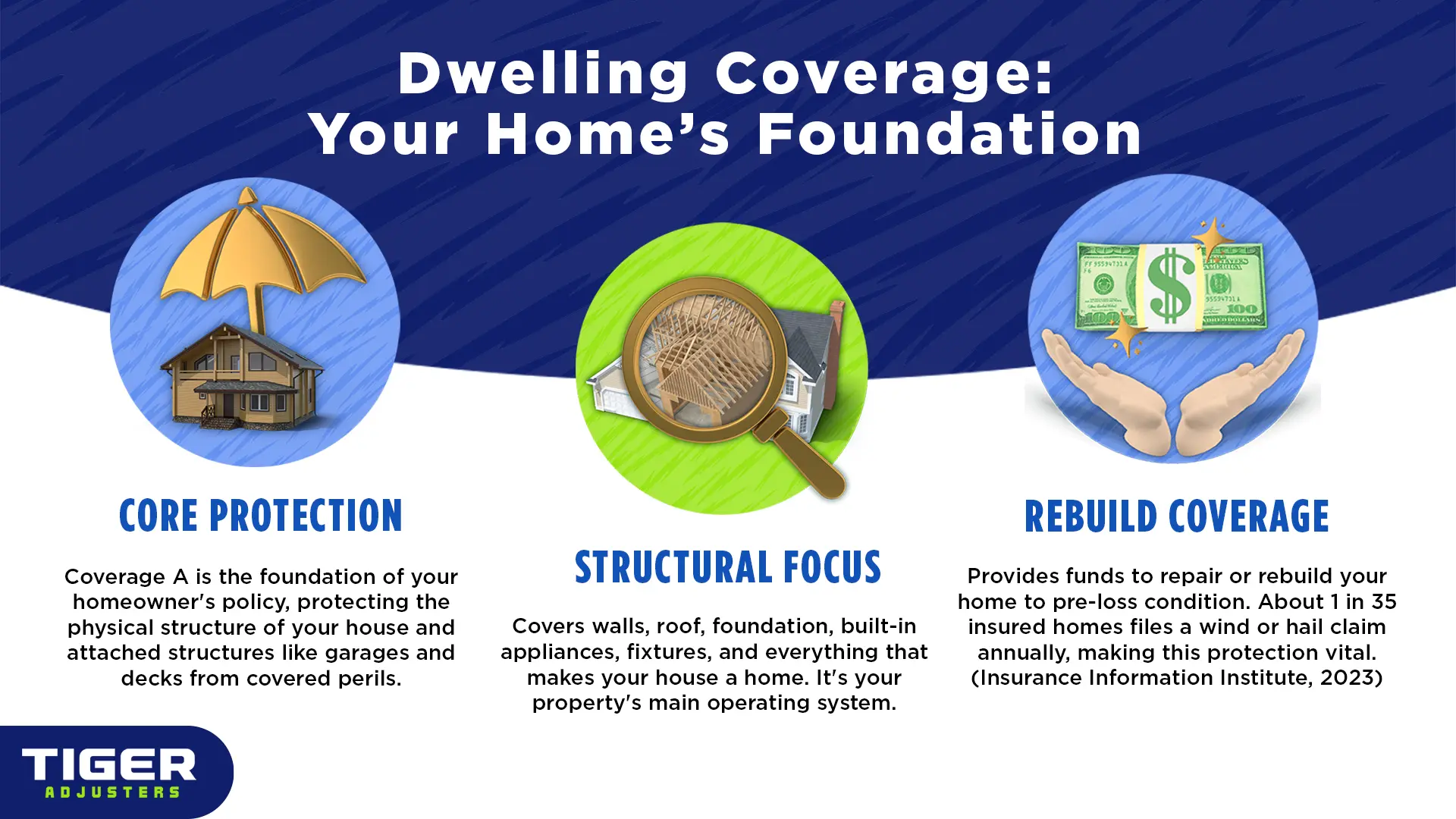
No, and this is where you really need to be careful. The amount of dwelling coverage you have is crucial, and it's not always the same as your home's market value or mortgage balance. Your coverage should really be based on the cost to rebuild your home from the ground up, that means labor, materials, and even demolition, which can be very different from what you could sell it for. The maximum your insurance company will pay for a covered loss to your dwelling is just that: the maximum. And if your rebuild cost goes over this, that extra cash is coming straight out of your pocket! And even with great dwelling coverage, certain perils (like floods or earthquakes) are almost always excluded and require separate policies.
Dwelling Coverage is the bedrock of your home's financial protection, providing protection for the physical structure itself against covered perils. Don't simply assume your coverage amount is sufficient based on your home's value. For an accurate assessment of your rebuild costs and to confirm your dwelling coverage is robust enough for any scenario, consult with a Public Adjuster and we'll clarify what's actually covered in your policy, because nobody wants a surprise when their house is on the line!


