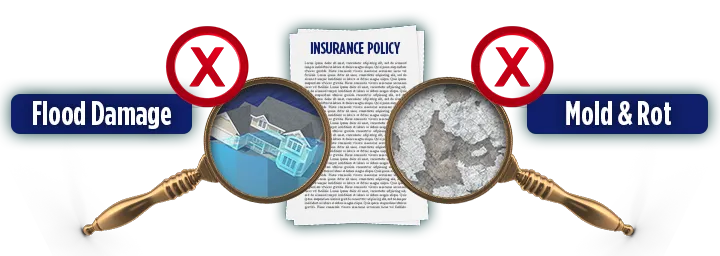
Within property insurance, an “exclusion” is a provision in an insurance policy that denies coverage for certain perils, people, property, or locations. It's explicitly outlined in your policy, indicating what the insurance company will not cover.
Troy Tiger Explains: Exclusions
Let's talk about exclusions. I know this can be a bit of a downer, but while we all love what insurance does cover, it's just as vital to understand what it doesn't. This isn't just some legal jargon; it's like a hard-coded directive in your policy that just says, "Nope, that's not covered." Think of it as your policy's built-in firewall, blocking specific threats or data streams that are outside its operational scope. It’s the insurance company's way of defining the parameters of its service, because even a super-secure system has vulnerabilities it won't address by default. And here's why understanding them is crucial: in the five-year period from 2018-2022, 5.8 percent of insured homes experienced a claim, and if that claim falls under an exclusion, you're out of luck(Insurance Information Institute)!
Exclusions Purpose
Denies Coverage: This is the primary function. An exclusion explicitly states that certain types of damage, specific events, or particular properties/situations are not covered by the policy. It's a "no-entry" sign for certain claims.
Limits Exposure: For the insurance company, exclusions are a key tool for managing financial risk. They prevent payouts for catastrophic events (like widespread natural disasters usually covered by specialized policies) or risks that are uninsurable in a standard context.
Clarifies Policy Scope: Exclusions make the policy's boundaries clear. They define what the agreement is not about, helping both parties understand the precise terms of the contract.
How an Exclusion Works
Insurance companies review various risks and determine which ones are too high to include in standard policies, or which require specialized, separate coverage.
These identified risks are then explicitly written into the policy as exclusions, usually in a dedicated section, but sometimes they're embedded within coverage clauses.
If a loss occurs due to an excluded peril or under an excluded circumstance, your claim will be denied for that specific reason.
Do Insurance Policies Always Have Exclusions?
Absolutely. Think of it like any sophisticated software package – it comes with certain limitations or compatibility requirements. No insurance policy covers everything under the sun. Without exclusions, premiums would be astronomical. They are a fundamental component of risk management in the insurance industry.
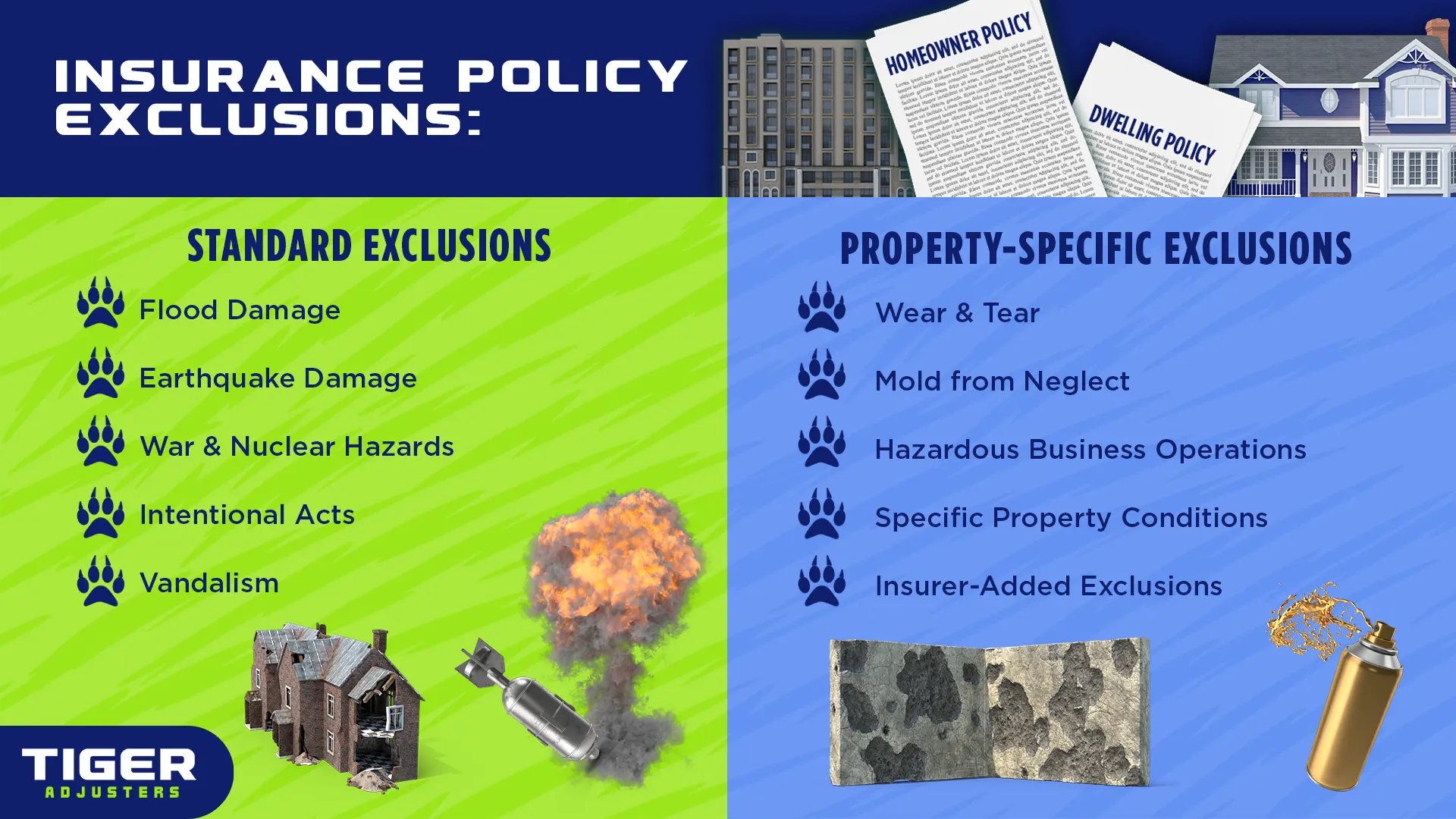
Infographic: Insurance Policy Exclusions
Breakdown of Exclusion Scenarios:
Peril-Based Exclusions (Often Standard)
These are among the most common and often address widespread, catastrophic events not typically bundled into a standard policy.
Flood Damage: Unless you have a separate flood insurance policy, damage from floods—rising water from outside your home—is almost universally excluded. Your standard homeowner's policy won't cover your basement turning into a swimming pool from a river overflow.
Earthquake Damage: Similar to floods, earthquake damage is usually excluded. If your home shifts off its foundation during a tremor, you'll need a specific earthquake policy to cover the structural repairs.
War & Nuclear Hazard: These are global, catastrophic events that fall outside the scope of individual property insurance. No amount of premium could cover such widespread, unpredictable destruction.
Property or Condition-Based Exclusions (Specific to Your Property)
These exclusions relate to the condition of your property or specific types of property.
Wear and Tear / Gradual Deterioration: Insurance is for sudden, accidental events. Damage that occurs over time due to neglect, poor maintenance, or general aging (like a leaky roof that's been dripping for years) is typically excluded.
Mold from Neglect: If mold growth is a result of long-term dampness or neglect rather than a sudden, covered event (like a burst pipe), it's usually excluded.
Certain Business Operations: If you run a high-risk business out of your home that significantly increases your property's exposure to fire, liability, or other perils, your standard homeowner's policy may exclude coverage related to those specific business activities.
Intentional Acts / Fraud Exclusions
This is a universal "no-go" for insurance companies.
Intentional Damage: Any damage to your property caused by deliberate acts from you or someone acting on your behalf is excluded. You can't set your house on fire and expect a payout.
Illegal Acts: Losses arising from illegal activities or contraband are never covered.
Are All Exclusions Created Equal?
No, definitely not! And this is where understanding your policy becomes absolutely critical. While some exclusions are standard across most policies (like floods or war), others can be specific to your insurer, your location, or even the type of property you own.
Read the Fine Print: Exclusions are legally binding. It's crucial to read your policy thoroughly to understand exactly what isn't covered. Don't just assume anything, because that’s where the insurance company finds their profit margin!
Policy Differences: Just because your neighbor's policy excludes something doesn't mean yours does, and vice versa. Policies can really vary, so you can’t just copy and paste here.
Endorsements: Sometimes, an endorsement can add coverage for something that was previously excluded (like the Water Backup endorsement for sewer backups). But flip side, an endorsement can also add an exclusion to your policy, so be vigilant and keep your eyes peeled!
Final Thought:
Exclusions are the boundaries of your insurance contract, clearly defining what's not covered. Understanding them is absolutely key to avoiding unwelcome surprises when a claim arises. Don't let a subtle exclusion turn your potential payout into a denial. For a thorough review of your policy's limitations and to verify your coverage aligns with your true risks, call a Public Adjuster. We're pros at interpreting those tricky policy intricacies and we'll clarify what's covered versus what's not in your policy!