Insurance Terms Glossary

Hazard

Within property insurance, a "hazard" is a circumstance, condition, or activity that increases the likelihood or severity of a loss occurring due to a covered peril. It's not the actual event causing damage (that's a peril), but rather something that makes a peril more probable or its damage worse.
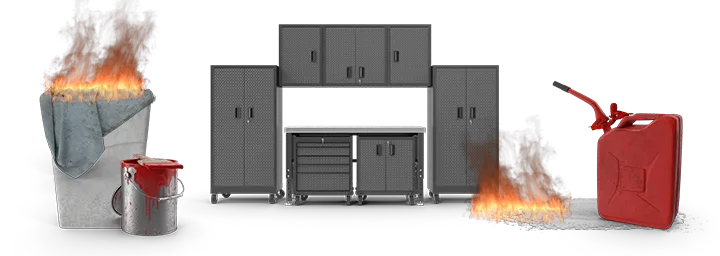
Hazard

Troy Tiger Explains: Hazards

Let's talk about "Hazards!" A hazard in insurance isn't the actual bad thing that happens – that's a peril, like a fire or a storm. Instead, a hazard is anything that makes that peril more likely to happen, or makes the damage from it even worse!

Think of it like this: if fire is the peril, then leaving a gas can sitting out in the hot sun on your porch is a hazard – it's just asking for trouble! Or if a car accident is the peril, then your squeaking brakes? Total hazard! It’s about spotting the little problems that can lead to big headaches.

Understanding Hazards

  • Identifies Risk Factors: Helps pinpoint specific conditions or activities on a property that elevate the potential for loss.
  • Informs Underwriting: Insurers use hazard assessments to evaluate risk, determine eligibility for coverage, and calculate premiums.
  • Encourages Loss Prevention: Knowing what constitutes a hazard can prompt policyholders to take preventative measures (e.g., clearing brush, fixing faulty wiring).

How Hazards Work with Perils

  • A condition (e.g., old, frayed electrical wiring) or an activity (e.g., routinely leaving flammable materials near a heat source) is present on your property.
  • This hazard significantly increases the chance that a specific peril (e.g., a fire) will occur.
  • The increased probability leads to the peril happening, resulting in damage or loss.
  • When you file a claim, the insurer might investigate if an undisclosed or unaddressed hazard contributed to the loss, potentially impacting coverage if policy terms were violated.

Does My Policy Care About All Hazards?

Good news is, your policy mostly cares about hazards that are within your control or that you should reasonably know about. They want you to keep your property safe!

Bad news? If you ignore obvious hazards, or create new ones, it can definitely cause problems for your coverage down the line. Sometimes, policies even have specific clauses about maintaining your property to avoid increasing hazards. Good thing you can call a Public Adjuster to act as your property risk analyst, helping you identify potential hazards and understand how they might impact your coverage, so you’re always prepared!
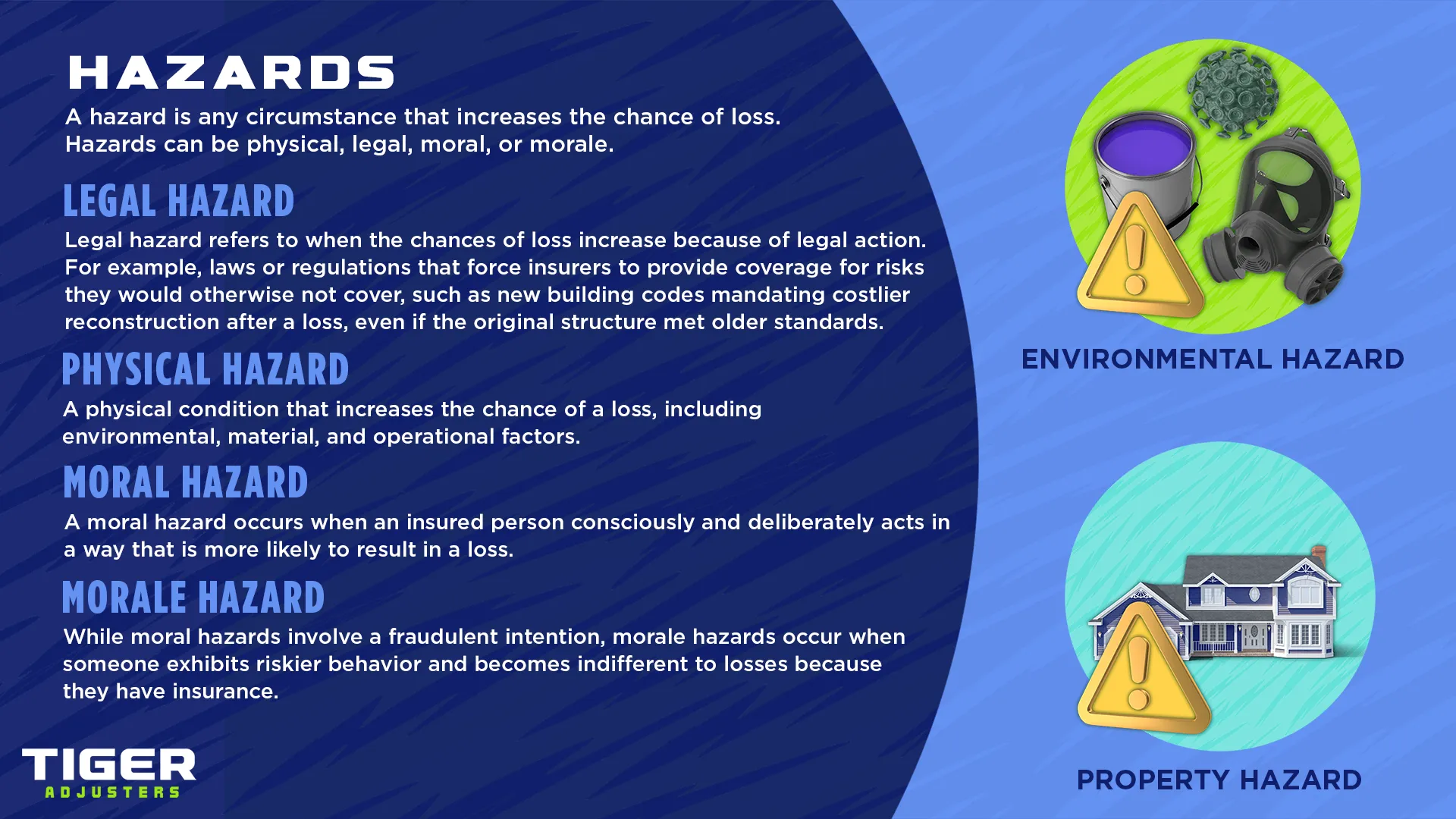
Infographic: Hazards

Breakdown of Common Types of Hazards

  • Physical Hazards:
    • These are material characteristics of the property that increase risk. Examples include:
      • Old or Faulty Wiring: Increases the likelihood of electrical fires.
      • Unmaintained Roof: Prone to leaks, especially during windstorms or heavy rain. According to the Electrical Safety Foundation International (ESFI), electrical problems account for 51,000 home fires annually, resulting in $1.3 billion in property losses.
      • Accumulated Debris/Brush: Provides fuel for fires, especially in wildfire-prone areas.
      • Slippery Walkways/Broken Steps: Increases the risk of slip-and-fall injuries (liability hazard).
  • Moral Hazards:
    • These relate to the character or integrity of the policyholder, increasing risk due to dishonesty or indifference. Examples include:
      • Intentional Damage: Deliberately causing a loss to collect insurance money (fraud). 
      • Carelessness/Neglect: A general disregard for property maintenance because "insurance will cover it." It’s important to note that while not always directly excluded, chronic neglect can lead to denied claims.
  • Morale Hazards:
    • Similar to moral hazards, but specifically refers to an attitude of carelessness or indifference simply because one has insurance. Examples include:
      • Leaving Doors Unlocked: Not taking basic security precautions because property is insured against theft.
      • Ignoring Minor Repairs: Postponing small fixes that could prevent larger, more costly damages (e.g., not fixing a loose shingle).

Are All Hazards Treated Equally?

No, definitely not! Insurers assess hazards based on their potential impact on the frequency and severity of losses. A small, easily fixed hazard (like a loose railing) is way less impactful than a major structural issue (like a collapsing foundation). Hazards that are within your control (like clearing dead trees or fixing faulty appliances) are seen differently than those totally outside your control (like living in an earthquake zone). Plus, your policy might have specific clauses or extra add-ons related to certain hazards, especially for things like pools, trampolines, or certain dog breeds, which might need special safety measures or additional premiums.

Final Thought:

Hazards are the silent saboteurs that can make your worst insurance nightmares come true. Don't just wait for a peril to happen; actively identify and mitigate the hazards on your property to protect your home and your policy. For a thorough assessment of your property's hidden risks and to confirm that your preventative measures align with your coverage, call a Public Adjuster, your expert at untangling coverage intricacies who will clarify what's actually covered in your policy.

Search for more terms